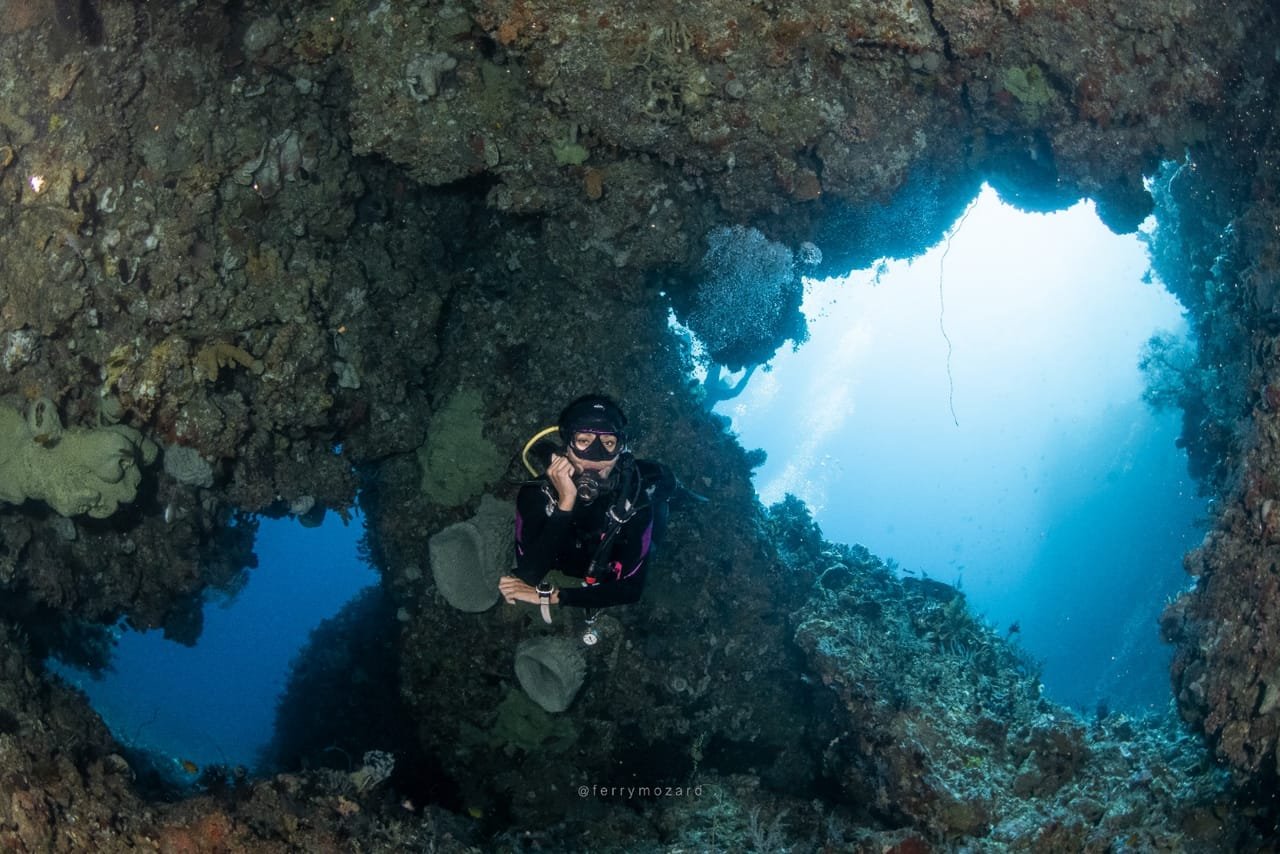
Diver framed by a coral swim-through with sunlight streaming through the opening

The Ultimate Guide to
Diving in Alor, Indonesia

Pristine reefs, volcanic landscapes, and world-class biodiversity.
Discover why Alor remains Indonesia's last untouched diving frontier.

Why Dive in Alor

Alor sits at the heart of the Coral Triangle, where powerful currents through the Pantar Strait fuel some of the richest marine ecosystems in Indonesia. With 45+ dive sites, empty reefs, and encounters ranging from pygmy seahorses to Blue Whales, this is diving the way it used to be — raw, uncrowded, and unforgettable.

Whether you're a wide-angle shooter chasing hammerheads or a macro photographer hunting Rhinopias, Alor delivers on both fronts. Explore our full marine life guide.

Pristine Ecosystems

Over 1,000 species of reef fish and 500 species of coral thrive across 45+ dive sites — from volcanic black-sand slopes to vibrant coral walls.

Rare Critter Capital

Rhinopias, Blue-ringed Octopus, Halimeda Ghost Pipefish, Mimic Octopus, and countless nudibranch species. A macro photographer's paradise.

The Big Stuff

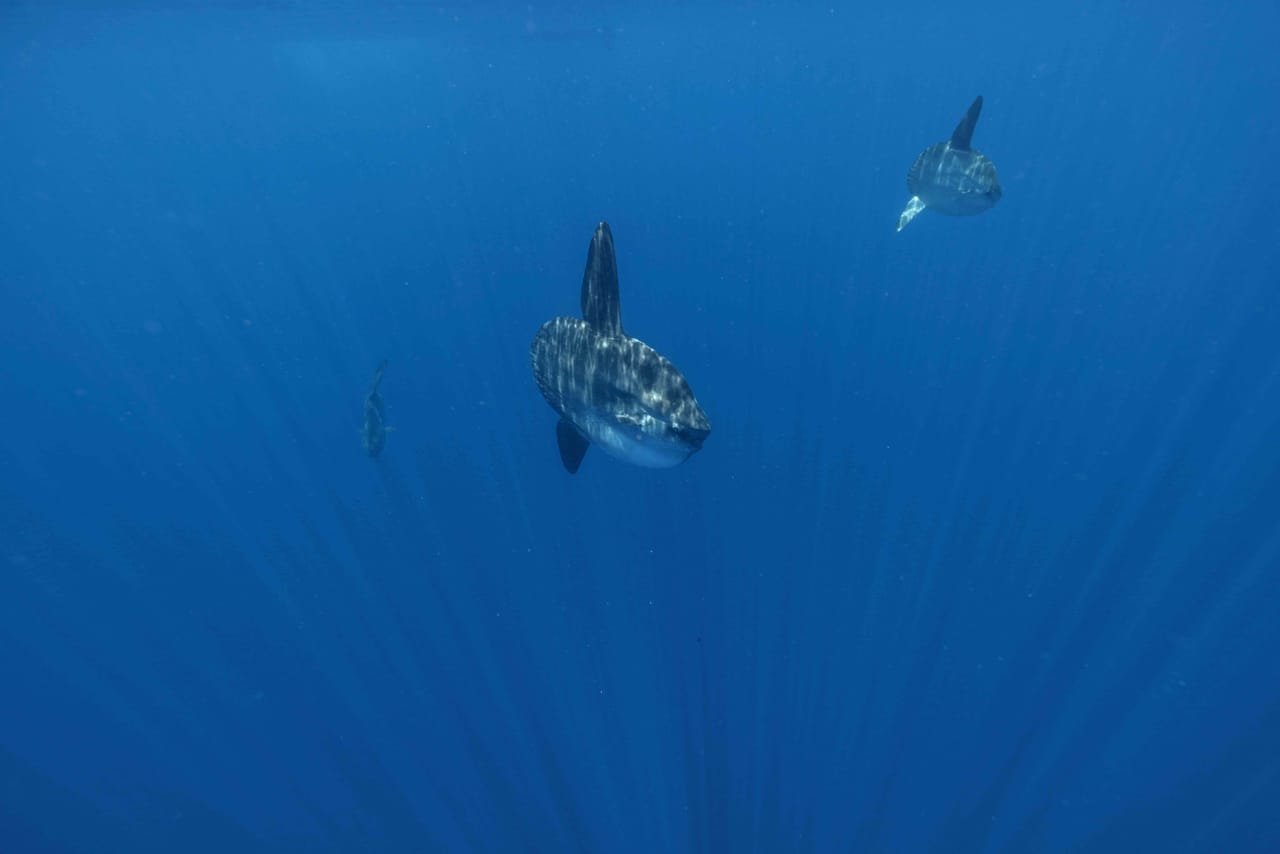
Seasonal migrations bring Hammerhead Sharks, Thresher Sharks, Mola Mola, and Blue Whales through the strait — encounters that rival anywhere on earth.

Crystal Visibility

The Pantar Strait regularly delivers 30–40+ metres of visibility during the high season, making Alor one of the clearest diving destinations in Indonesia.

Mola Mola sunfish in blue water near Alor

When to Dive in Alor

Alor's diving year is open from mid-March to mid-December — but the season has rhythms most divers don't expect. Migrating whales pass through in two distinct windows. Cold upwellings transform the diving in the final months. And throughout the year, the moon matters as much as the calendar. Here's the real story of when to come.

Mid-March → Mid-December

The Stable Diving Season

Best For

First-timers, families, photographers chasing the year's clearest water, or anyone wanting the most predictable diving Alor offers.

The diving year in Alor stretches from late March through to early December. Outside this window the wet season takes over — rough seas, heavy rain, and limited boat access shut the dive sites down completely. From mid-March, conditions stabilise. Flat seas, predictable weather, and reefs returning to peak form after months of rest.

The first half of the season (April to August) is generally the calmest, with the year's clearest water — visibility regularly hits 30 to 40 metres. The second half tilts cooler and more energetic as cold upwellings begin. Both halves are world-class diving; they just feel different.

Jun – Jul · Sep – Nov

The Whale Migration Windows

Best For

Cetacean encounters, surface and underwater whale photography, naturalists. Pair with a whale watching excursion for the best chance.

Alor sits on one of the world's great cetacean corridors. Blue Whales, Sperm Whales, and pods of pilot whales and dolphins move through the Pantar Strait twice each year — northbound in early summer, then southbound from late September.

The northbound window (June–July) is the calmer of the two — warm seas, gentle currents, and good odds of spotting whales at the surface during boat transfers or dedicated whale watching trips. The southbound window (September–November) overlaps with cooler upwellings and rougher water, but the activity is more intense: bigger pods, more frequent surface encounters, often joined by feeding pelagics below.

Sightings are never guaranteed — these are wild migrations, not scheduled events. But over a 7- to 10-day stay in either window, the odds are good.

September → December

The Pelagic Season

Best For

Experienced divers, big-animal photographers, anyone who came specifically for the pelagics.

From late September, deep nutrient-rich water starts upwelling into the Pantar Strait. Surface temperatures stay comfortable, but at depth the water can plunge from 28°C to 22°C in a matter of metres. Visibility drops slightly — still 25 to 30 metres — and currents get notably stronger. The diving gets significantly more demanding.

This is also when Alor gets wild. Mola Mola appear from the blue at Halerman, riding the cold water up from below. Thresher sharks pass through more frequently. Hammerheads, jacks, and barracuda show up in bigger numbers at Kal's Dream and Monaseli, drawn by the plankton blooms the upwellings produce. For experienced divers chasing big-animal encounters, no other window in Alor's year delivers like this one.

Pack a 5mm wetsuit and a hooded vest. This is not the season for new divers — but for the right diver, it's the most rewarding window of the year.

Plan Around the Moon, Not Just the Month

Full moon and new moon weeks generate the strongest tidal currents through the Pantar Strait — and that's when pelagic action peaks. Hammerheads, big schools, and visiting sharks push through with the moving water. If you're flexible on dates, align your trip with a lunar window in any month. Combined with the cold upwelling period (September through December), a full or new moon week is the highest-probability window for big-animal encounters that Alor offers.

Always Available · Any Month

And These Are Always There

Three things in Alor that never go off-season — regardless of when you come within the diveable window.

Muck Diving

Kalabahi Bay's muck sites produce world-class macro photography every month of the diveable window. Black volcanic sand hides rhinopias, blue-ringed octopus, mimic octopus, halimeda ghost pipefish, harlequin shrimp, and an extraordinary nudibranch list. Many photographers come to Alor for the muck alone — the diversity rivals Lembeh, but the sites are virtually empty.

Hammerheads

Hammerheads aren't strictly seasonal in Alor. They ride the tidal currents through the Pantar Strait year-round, but show up most reliably during full moon and new moon weeks when the strongest tides push them through. A lunar window during the cold upwelling months (September–December) is the highest-probability hammerhead encounter Alor offers — though they can appear in any month.

Reef Life & Macro

The reefs themselves are pristine year-round. Turtles on most dives, white-tip and grey reef sharks at deeper sites, gorgonian sea fans loaded with pygmy seahorses, fields of staghorn coral, and the kind of fish density that's vanishing in most of Southeast Asia. Even on a quiet month, the baseline diving here is exceptional by any global standard.

January and February bring wet weather and rough seas. The resort is closed during this period and reopens in March. Whale watching excursions run from June through November for guests who want to see cetaceans from the surface.

A Typical Dive Day

Every day in Alor is shaped by the tides, the weather, and where the marine life is showing up. Here's what a typical day looks like — though your guides may adjust the schedule based on current conditions and moon phase.

07:00

Breakfast

Start the day at the restaurant with fresh coffee, fruit, and a full breakfast spread.

08:00

Morning Briefing & Boat Departure

Your dive guide briefs the group on the day's sites, conditions, and marine life to look out for. Gear is prepared and loaded, and you head out on one of our dedicated dive boats.

08:30 — 11:30

Morning Dives (2 dives)

Two guided dives with a surface interval on the boat between them. Sites are selected based on tide, current, and what the group wants to see. Small groups mean personalised dive plans.

12:00

Lunch & Rest

Return to the resort for a family-style lunch. Relax by the pool, review your photos in the camera room, or explore the resort grounds.

14:30

Afternoon Dive or House Reef

Depending on conditions, head out for a third boat dive or explore the vibrant <a href="/dive-sites/sebanjar/">house reef</a> at your own pace. The <a href="/dive-sites/sebanjar/">house reef</a> is accessible directly from the resort and is excellent for both diving and snorkelling.

17:00

Sundowners

Watch the sunset from the pool deck or beach.

19:00

Dinner

Fresh local and international cuisine served family-style at the restaurant.

20:00

Night Dive (optional)

On select evenings, we run night dives on the <a href="/dive-sites/sebanjar/">house reef</a> — a completely different world after dark. Expect hunting octopus, sleeping turtles, and bioluminescent displays.

We run small dive groups of no more than 4 divers per guide across our fleet of three boats. This means personalised attention, flexible dive plans, and no crowded sites. See our dive packages for details on what's included.

What to Expect Underwater

Diving the Pantar Strait is unlike diving in most places. Strong currents fuel the biodiversity, thermoclines keep you on your toes, and every dive site has its own personality. Here's what experienced Alor divers know.

Thermoclines & Water Temperature

Surface temperatures hover around a comfortable 28°C year-round, but Alor is famous for dramatic thermoclines. Deep-water upwellings — especially during the Pelagic Season (Sept–Nov) — can drop the temperature to 22–24°C at depth without warning. Sites like Halerman are particularly known for this.

We recommend a 5mm full wetsuit as standard for Alor. If you tend to run cold, add a hooded vest. Neoprene booties are also advisable.

Currents & Tides

Alor's biodiversity is fuelled by powerful tidal currents, and some of our best sites — Kal's Dream, Monaseli, Sharks Galore — are high-energy drift dives. Conditions change significantly with the lunar cycle:

Full or New Moon

Strongest currents. Best for adrenaline-pumping drift dives and pelagic encounters. Advanced divers love these windows.

Half Moon

Gentler conditions. Ideal for relaxed exploration, macro photography, and longer bottom times on the muck sites.

A Surface Marker Buoy (SMB) is mandatory for every diver. Currents can push you away from the reef quickly during your safety stop. Our guides always carry one, but we advise all divers to bring their own. A reef hook is also extremely useful at pinnacle and channel sites — it lets you hold position to watch the sharks pass without exhausting yourself or damaging the reef.

Underwater Photography in Alor

Alor is one of Southeast Asia's most rewarding destinations for underwater photographers. The combination of exceptional visibility, diverse marine subjects, and uncrowded dive sites means you get the time, space, and conditions to shoot at your best — without fighting for position on a crowded reef.

Why Photographers Choose Alor

The variety is what sets Alor apart. In a single trip you can shoot wide-angle reef scenes in 40-metre visibility, hunt for rare macro critters on volcanic black sand, capture hammerheads cruising through blue water, and photograph Blue Whales from the surface. Few destinations in the world offer this range.

The muck sites in Kalabahi Bay are world-class for macro. Rhinopias, Wunderpus, Mimic Octopus, Halimeda Ghost Pipefish, and an astonishing variety of nudibranchs and shrimps. The black sand backgrounds produce clean, dramatic portraits that stand out from typical reef shots.

On the reef and wall sites in the Pantar Strait, the hard and soft coral diversity is extraordinary. Gorgonian sea fans loaded with pygmy seahorses, fields of staghorn coral, and massive barrel sponges — all in gin-clear water with natural light penetrating deep.

What to Bring

We recommend bringing at least two lens setups:

Wide-Angle

Essential for the Pantar Strait reef and wall sites. During the High Season (April–August), visibility regularly exceeds 30 metres, so your widest rectilinear or fisheye lens will shine. Also your best option for pelagic encounters and whale shots.

Macro

Essential for the Kalabahi Bay muck sites. A 60mm or 100mm macro lens is ideal for Rhinopias, nudibranchs, and ghost pipefish. Bring a diopter or wet lens for super-macro subjects like pygmy seahorses.

Mid-Range Zoom

Useful during the Pelagic Season (Sept–Nov) for capturing sharks and Mola Mola at moderate range. Also handy for fish portraits and reef scenics when you want more flexibility.

On-Site Facilities

Both Moko Alor Dive and Naraya Alor Dive feature dedicated camera rooms with charging stations, workbenches, and rinse tanks for your housing and strobes. Small dive groups mean you'll never be rushed on a dive or fighting for space on the boat — take the time you need to get the shot.

Spares & Preparation

There are no dive shops or camera stores in Alor. Bring spare O-rings for your housing ports and strobes, extra batteries, a backup sync cord, and any specialty tools you might need. The resort carries common spares, but for housing-specific parts, it's always safer to be self-sufficient.

We also recommend reef-safe sunscreen — your hands are in the water all day, and standard sunscreen damages the very reefs you're here to photograph.

Interested in a dedicated photo trip? Get in touch and we'll help you plan your schedule around the best conditions and subjects for your style of shooting.

Signature Dive Sites

45+ dive sites across the Pantar Strait, from black-sand muck to high-current drift walls. Below are six of the most iconic — a taste of what's possible.

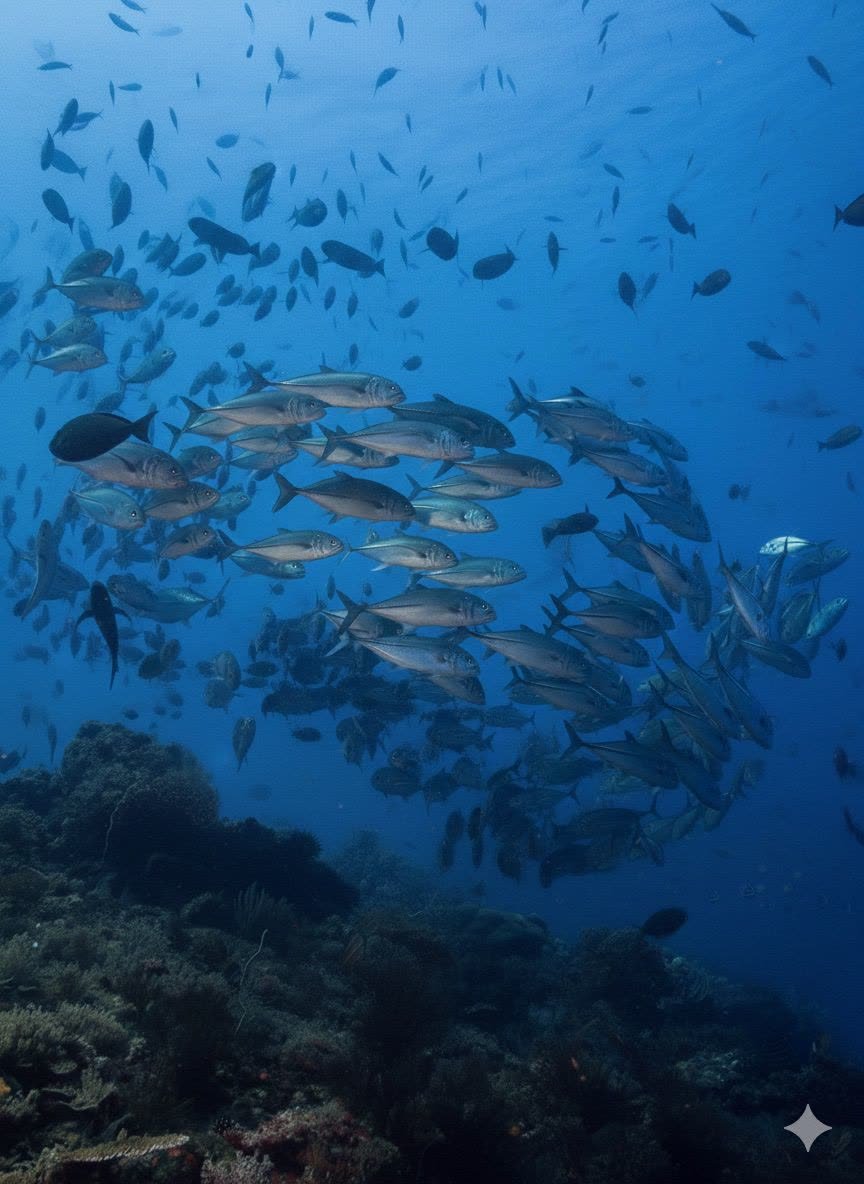
School of bigeye trevally in current over the reef at Kal's Dream Pelagic

Kal's Dream

Advanced 5–40m+

A legendary submerged pinnacle off Pantar where powerful currents converge. Schools of barracuda, hammerheads, dogtooth tuna, and reef sharks regularly patrol the blue. Strong drift dive — for confident divers only.

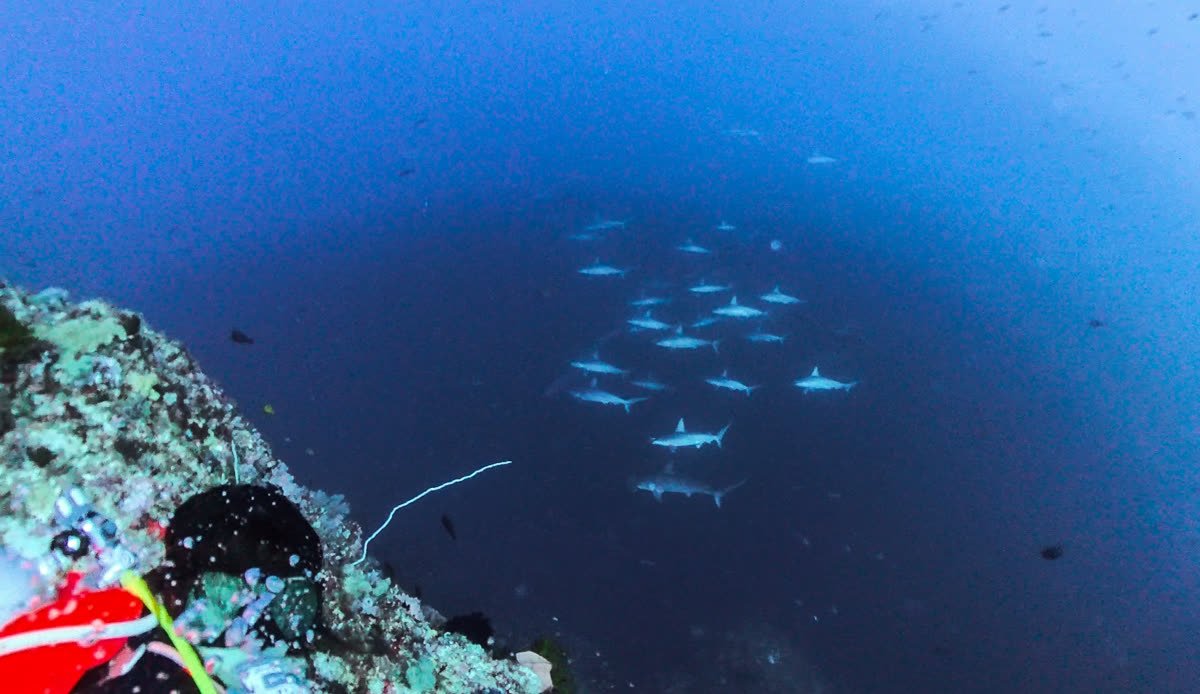
School of scalloped hammerheads cruising past the wall at Monaseli Wall

Monaseli

Advanced 15–40m+

One of Alor's best sites for big pelagic encounters. North side of Pantar, fully exposed to the Banda Sea — the deepest sea in Southeast Asia. A deep wall: the top slopes from 15–40m, the wall drops to 80m+. On the falling tide, current pushes over from the north and the site lights up. Procedure: negative entry, follow the wall down to 30m, hold at the corner — hence the alias Yellow Corner. Schools of bigeye trevally, snappers, redtooth triggerfish, surgeonfish. Reliable for white tip reef sharks, eagle rays, great barracuda, napoleon wrasse, bumphead parrotfish. Around full and new moon — strongest current, most upwelling — schools of scalloped hammerheads pass through, anywhere from a handful to 50–60. Safety stop usually with black tips and schooling barracudas. Nitrox recommended.

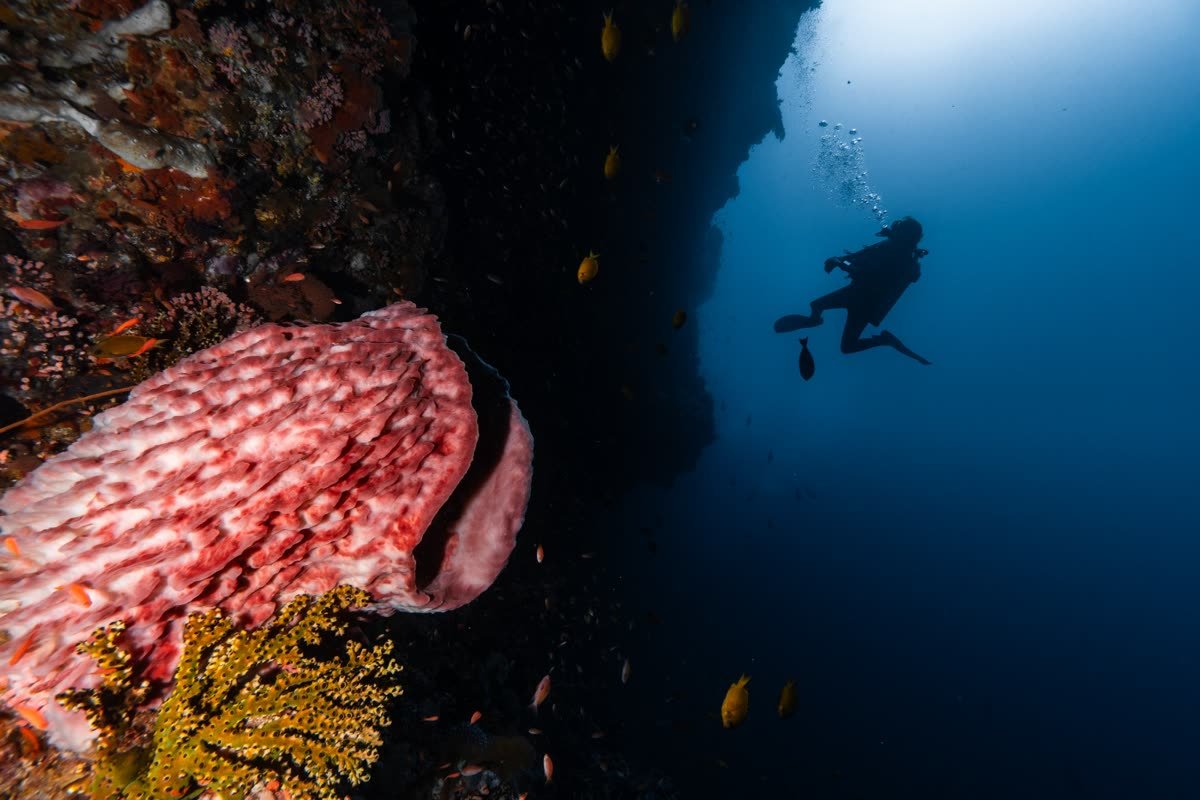
Diver alongside a large pink barrel sponge on the Bama Wall Wall

Bama Wall

Advanced 5–30m+

Also called the Great Wall of Pantar. A coral-covered wall from the surface to 60m, with most dives sitting at 25–30m. Schools of fish, napoleon wrasse, bumphead parrotfish, sea snakes, white tip and black tip reef sharks, and occasional pelagics out in the blue. Reef-hook spots and deeper overhangs along the wall; the dive often ends with a drift or a shallow macro section. Down currents can show up unexpectedly — advanced only.

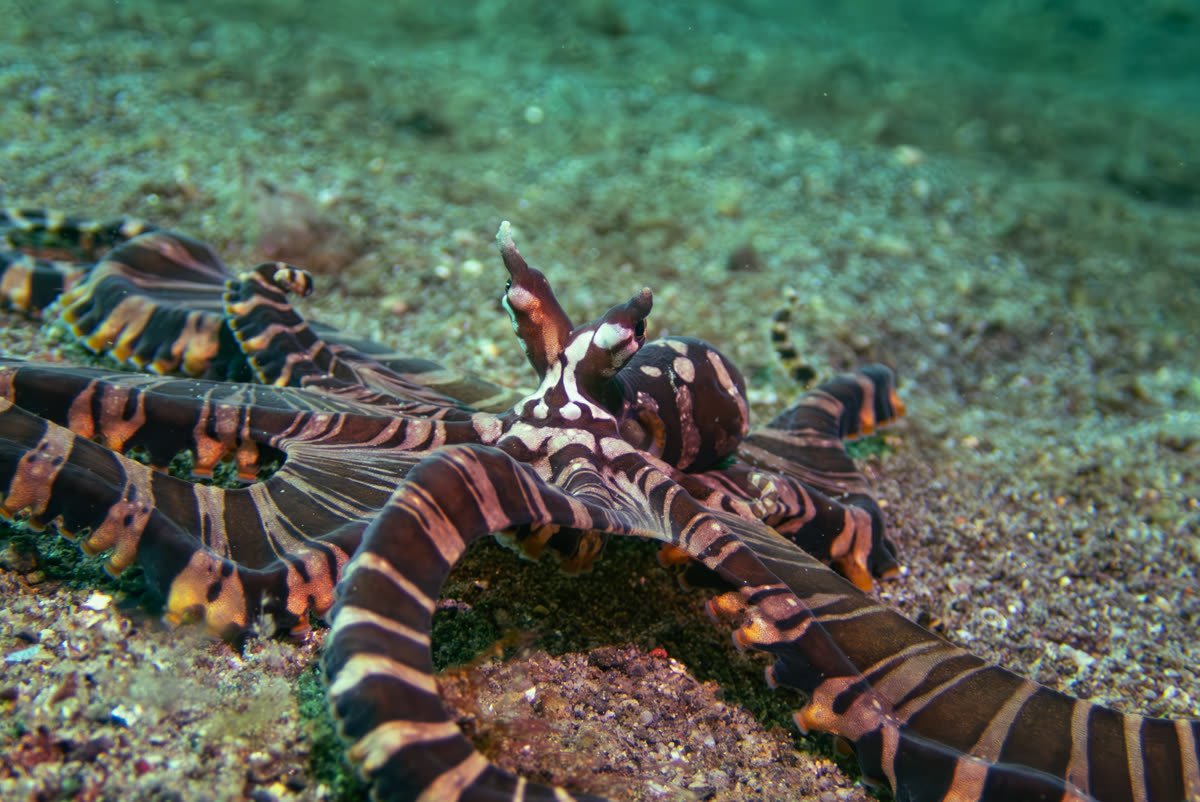
Wonderpus octopus on black volcanic sand at Mucky Mosque Muck

Mucky Mosque

Beginner+ 5–25m

Masjid Ampera — one of Kalabahi Bay's signature muck sites. Black volcanic sand hides rhinopias, frogfish, mimic octopus, mandarinfish, and an extraordinary range of nudibranchs. A macro photographer's dream.

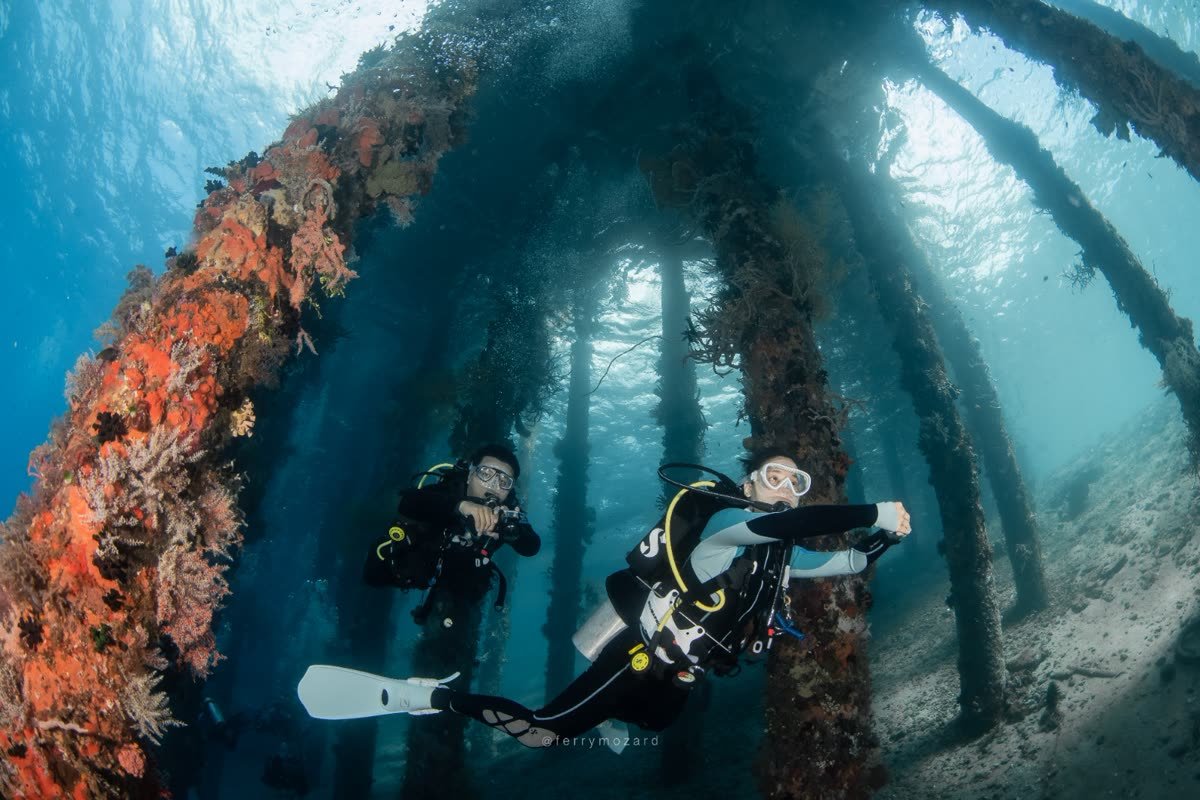
Divers under the coral-encrusted pillars of Bakalang Jetty Muck

Bakalang Jetty

Beginner+ 4–25m

A jetty dive with pillars from the surface to 12m. We start on the coral slope down to about 25m hunting for small subjects, then turn up to work the jetty itself. The old pillars are coral-encrusted and full of life — frogfish, nudibranchs, reef octopus, ribbon eels, ghost pipefish, hairy shrimp, candy crabs, and sometimes rhinopias or flying gurnards. Schools of juvenile fish swarm between the pillars.

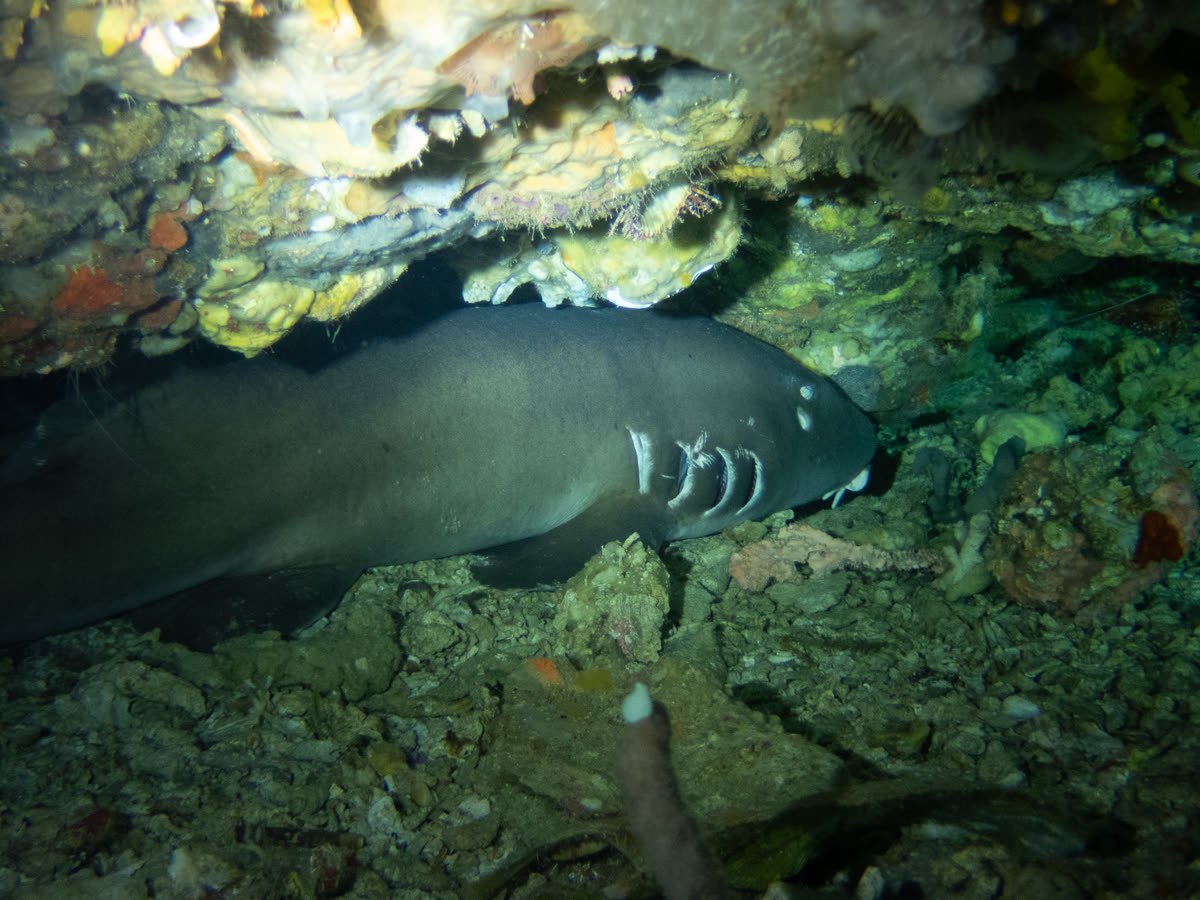
Nurse shark resting under a ledge on the Halerman wall Wall

Halerman

Intermediate–Advanced 5–40m+

A dramatic wall on the southern coast known for sudden, deep thermoclines — water temperatures can plunge to 22°C with no warning. The cold draws unusual sightings: Mola Mola, threshers, and dense fish action. There's also a big rock along the wall where large nurse sharks often sleep through the day.

Interactive Map

All 45 Sites on One Map

Browse the full Pantar Strait — filter by muck, reef, wall, cave, or pelagic, search by name, and open any site for depth, current, level, and marine-life notes.

Open the Map
Operational

Diving Protocols

Negative Entries

Surface currents in the Pantar Strait require rapid descent. Divers must be proficient in equalising quickly and regrouping at the 5m mark.

Nitrox Available

We offer Nitrox to certified divers, extending bottom time and making it easier and safer to complete multiple dives per day.

Conservation First

Gloves are prohibited to protect pristine coral and volcanic slopes. We maintain a strict no-contact policy with all marine life and substrate.

Thermal Protection

Sudden 24°C upwellings are common. A 5mm full suit and hood are recommended for thermal protection during southern site dives.

Small Groups

Maximum 4 divers per guide across our fleet of three dedicated dive boats. No crowded sites, no rushing — every dive is tailored to the group.

Who Can Dive in Alor

Alor's currents and conditions make it best suited to intermediate and advanced divers. We recommend a minimum of 30–50 logged dives to safely enjoy the Pantar Strait sites. That said, our muck diving sites in Kalabahi Bay are suitable for less experienced divers, and our guides tailor every trip to the group's ability.

Certification Requirements

All divers must hold a valid Open Water certification (PADI, SSI, or equivalent). For deeper sites and drift dives, an Advanced Open Water certification is strongly recommended. Nitrox certification is required to dive with enriched air.

PADI Courses in Alor

Our dive centre is a certified PADI resort offering a full range of courses — from your first breath underwater to professional-level training:

Discover Scuba Diving

A supervised introduction for complete beginners in sheltered waters. No prior experience needed.

Open Water Diver

The foundational certification that qualifies you to dive to 18 metres worldwide.

Advanced Open Water

Build confidence with deep dives, navigation, and drift diving. Recommended for Alor.

Rescue Diver

Learn to manage problems in the water and become a safer, more confident diver.

Divemaster

The first professional-level certification. Train in one of the most biodiverse environments on earth.

Specialty Courses

Including Nitrox, Deep Diver, Drift Diver, and Underwater Photography.

Interested in combining a course with your trip? Contact us and we'll build it into your itinerary.

Non-Divers & Snorkellers

Alor is not just for divers. Snorkellers are welcome on our boat trips to suitable sites, and the shallow house reef offers easy access to vibrant corals, turtles, and reef fish right from the beach. We also offer whale watching, island hopping, traditional village visits, and hiking & trekking for guests who want to explore above the surface.

How Do I Get to Alor?

The Flight Path

There are no direct international flights to Alor. Most travellers fly into Jakarta (CGK) or Bali (DPS) and take a connecting flight to Kupang (KOE), the gateway city.

From Kupang, Wings Air operates ATR-72 prop planes to Mali Airport, Alor (ARD) — usually 1–2 flights daily, typically departing around 08:40 AM. This is currently the only carrier flying the final leg.

Pro Tip: Book your full journey (e.g. Jakarta → Kupang → Alor) on a single ticket via Batik Air. Since Batik and Wings Air are part of the same group, your bags are often checked through to Alor, and you're less likely to be stranded if the first leg is delayed.

Baggage & Dive Gear

Alor's flights use smaller aircraft, so weight matters.

Standard Allowance: Usually 20kg on Batik Air. Wings Air (the Alor leg) often has a 0–10kg base allowance depending on your ticket class.

Excess Baggage: Pre-purchase extra baggage online if you're carrying heavy cameras or dive gear — it's significantly cheaper than paying at the airport counter.

Dive Gear Policy: Batik Air Indonesia typically offers a 15kg sports equipment allowance for dive gear on certain routes. Always verify at the time of booking, as policies for the smaller Wings Air planes can vary.

Lithium Batteries: Ensure lithium batteries and regulators stay in your carry-on luggage — they are not permitted in checked bags.

Kupang Overnight

Because the flight to Alor departs early in the morning, many divers spend one night in Kupang.

Where to stay: The Aston Kupang or Sotis Hotel Kupang are the most popular choices for a comfortable transit night.

Alternative: If you take the midnight flight from Jakarta, you can often connect directly to the 08:40 AM Wings Air flight without needing a hotel.
Pre-Trip Preparation

The Alor Packing List

Alor is remote. Pack smart — there are no dive shops or pharmacies on the island.

Exposure Suit
  • 5mm Full Wetsuit (recommended)
  • Hooded Vest (for thermoclines)
  • Neoprene Booties
Safety Essentials
  • SMB & Spool (mandatory)
  • Reef Hook (for drift sites)
  • Dive Computer
  • Dive Insurance (DAN or equivalent)
Photography
  • Wide-Angle Lens (reefs & pelagics)
  • Macro Lens (muck & critters)
  • Spare O-rings, Ports & Sync Cords
  • Extra Batteries & Charger
Spares & Personal
  • Type C/F Power Adapter
  • Spare Mask Strap
  • Reef-Safe Sunscreen
  • Prescription Medication
  • Torch / Dive Light (for night dives)
Thermal Advisory: Water temperatures range from 22°C to 28°C depending on depth and season. Ensure thermal protection is rated for significant upwellings.

Frequently Asked Questions

What level of diving experience do I need?

We recommend a minimum of 30–50 logged dives for the Pantar Strait sites, which involve currents and negative entries. However, our muck sites in Kalabahi Bay are suitable for newer divers, and we offer PADI courses from Discover Scuba Diving through to Divemaster. Our guides adapt every dive to the group's ability.

What is the best time of year to visit?

The dive season runs from March to December. April to August offers the best visibility (30–40m+) and calm conditions. June and July bring Blue Whale and Sperm Whale sightings. September to November is the Pelagic Season — lower visibility but the best chance for Hammerheads, Mola Mola, and Thresher Sharks.

Do I need dive insurance?

Yes — we strongly recommend dive insurance (DAN or equivalent) for all guests. The nearest hyperbaric chamber is not on Alor, so comprehensive dive insurance with evacuation coverage is essential. Travel insurance is also recommended.

Can I rent dive gear at the resort?

Yes. Both Moko Alor Dive and Naraya Alor Dive offer full rental equipment including BCDs, regulators, wetsuits, and dive computers. See our rates page for rental pricing. That said, we recommend bringing your own exposure suit and mask for comfort and fit.

Is Nitrox available?

Yes. We offer Nitrox (EANx) to certified divers. If you don't yet have your Nitrox certification, we can arrange the course during your stay.

Is Alor safe?

Yes. Alor is a peaceful, rural island with very friendly locals. Crime is extremely rare. The main safety considerations are dive-related — currents, thermoclines, and remoteness from hyperbaric facilities — which is why we recommend experienced divers and proper insurance.

Do I need a visa?

Most international travellers can obtain a 30-day Visa on Arrival (VoA) at major Indonesian airports including Jakarta, Bali, and Kupang. Check with your nearest Indonesian embassy for the latest requirements before travelling.

Is there WiFi at the resort?

Yes, both resorts have WiFi. However, Alor is remote and internet speeds are limited compared to mainland Indonesia. It's sufficient for messaging, email, and uploading photos, but not ideal for video calls or streaming. We encourage guests to embrace the digital detox!

Can I pay by credit card?

We accept bank transfers for deposits and final payments. Credit card payment options are limited on Alor, so we recommend settling your balance via transfer before arrival. Local expenses (drinks, souvenirs) are best paid in Indonesian Rupiah (IDR) — bring cash, as ATMs on Alor are unreliable.

What if I'm not a diver? Can my partner still enjoy the trip?

Absolutely. Non-divers can snorkel on boat trips and explore our house reef, join whale watching excursions, go island hopping, visit traditional villages, or go hiking and trekking. Alor has plenty to offer above the surface.

How many dives per day can I do?

A typical day includes 2–3 boat dives plus unlimited house reef access. Night dives are available on select evenings. We also offer Nitrox to help you safely maximise your bottom time across multiple dives.

What about malaria or vaccinations?

Alor is in a low-risk malaria zone. Some travellers choose to take prophylaxis — consult your travel doctor before departure. We also recommend being up to date on routine vaccinations (Hepatitis A & B, Typhoid, Tetanus). Bring a personal supply of any prescription medication, as there are no pharmacies on Alor.

Process

How to Book

Plan your trip based on what you'd like to see and experience. Certain marine life is more likely during specific months and moon phases — get in touch and we'll help you find the best window. Browse our packages to get an idea of what's available.

  1. 01

    Initial Inquiry

    Share your preferred dates and we'll check availability. We respond within 24 hours.

  2. 02

    Custom Itinerary

    Tell us your package preference and which resort you'd like to stay at — Moko Alor Dive or Naraya Alor Dive. We'll build a tailored itinerary.

  3. 03

    Confirmation

    Secure your slot. You'll receive an official invoice with a 30% deposit to confirm your booking.

Chat with us