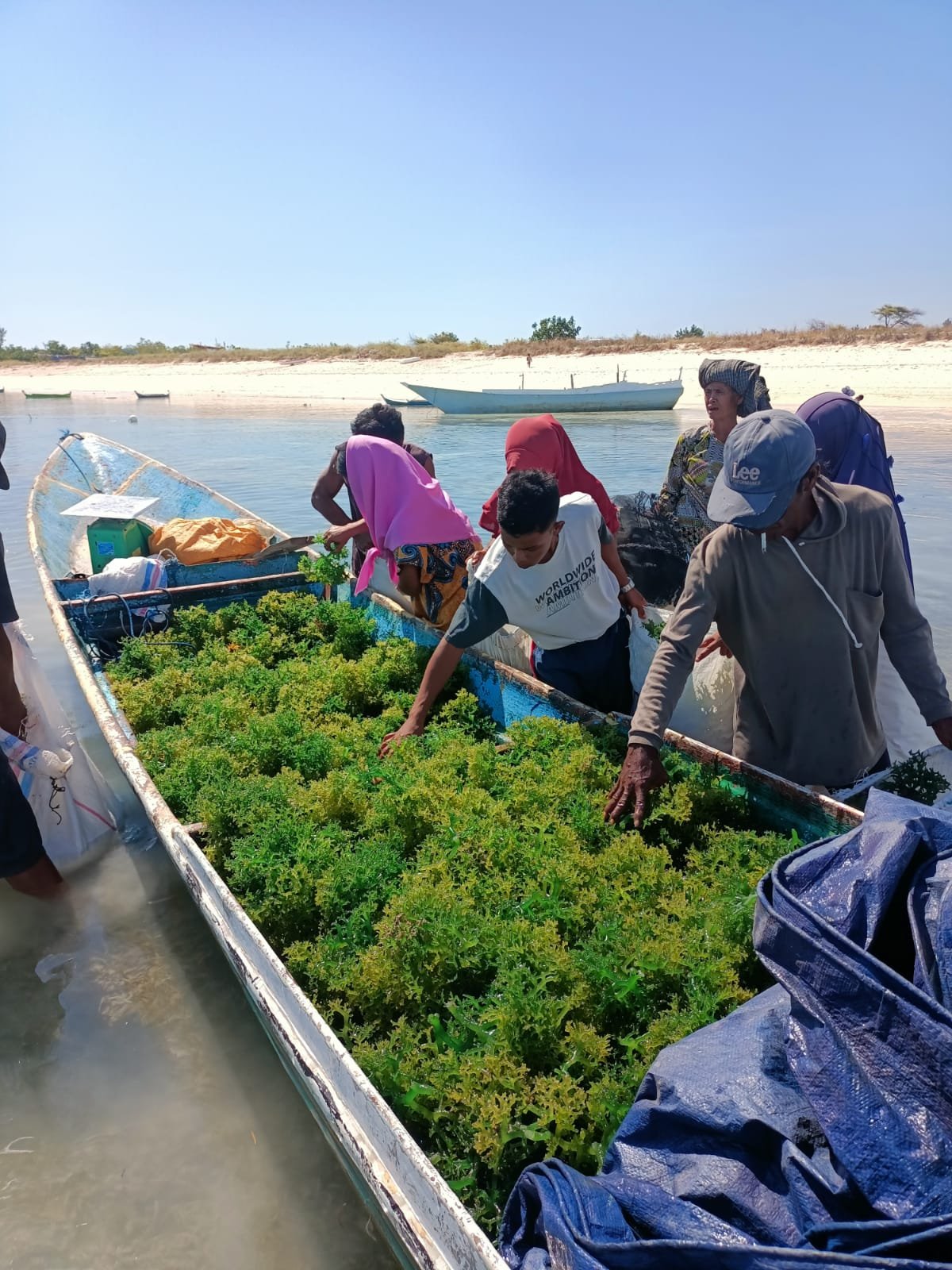
A group of seaweed farmers sorting freshly harvested seaweed on a wooden boat in the shallows

The AUE Initiative

The seaweed cooperative, the women weaving in the hills, and how a stay here helps.

The dive resort isn't the only thing this family runs. PT Rote Karaginan Nusantara is a seaweed processing factory in Kupang, working with around 5,000 farmers across Nusa Tenggara Timur — the same waters you'll be diving in. Inland from the resort, we also work with the women of Takpala and the surrounding villages to sell and promote their handwoven ikat. Both projects feed back into the reefs and communities you came to see.

5,000+
Seaweed Farmers
~50%
Women in the Workforce
NTT
Across the Province
2
Markets — Domestic & Export

Placeholder numbers — TBD: replace women-in-workforce % and any other figure once confirmed.

The Cooperative

PT Rote Karaginan Nusantara

The cooperative is a seaweed processing factory in Kupang. It works with several species of red seaweed, sells to both export and domestic markets, and employs around 5,000 farmers spread across Nusa Tenggara Timur — the islands stretching east of Bali into the Timor Sea.

The family started it in Kupang with a single aim: build something economically viable and ecologically sustainable in one of the poorest regions of Indonesia, and give back to the area. Today it's the larger of the two family businesses by far — the resort is what guests see, but most of the day-to-day work happens at the factory and out in the villages.
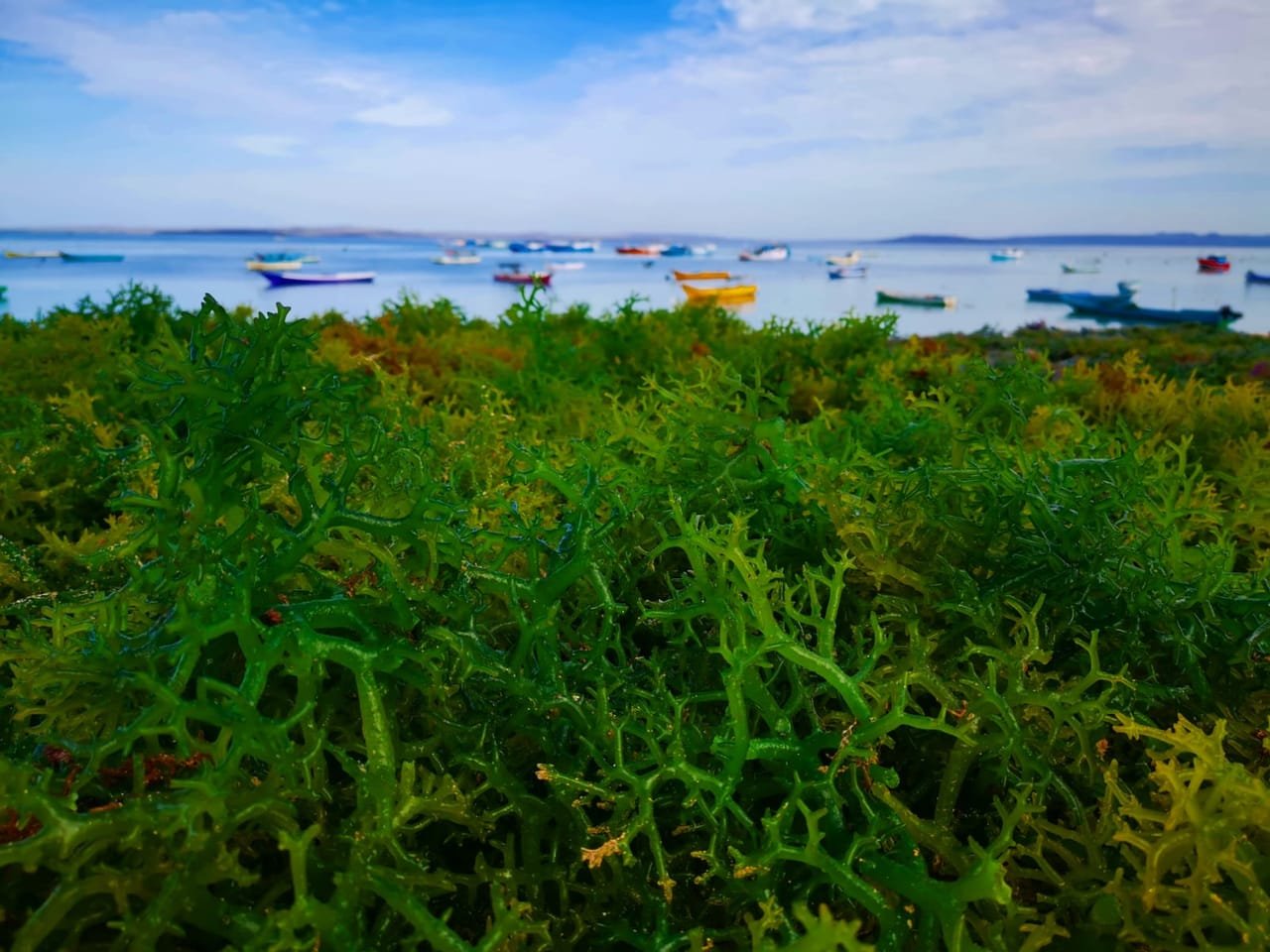
Freshly harvested green seaweed laid out in front of traditional fishing boats
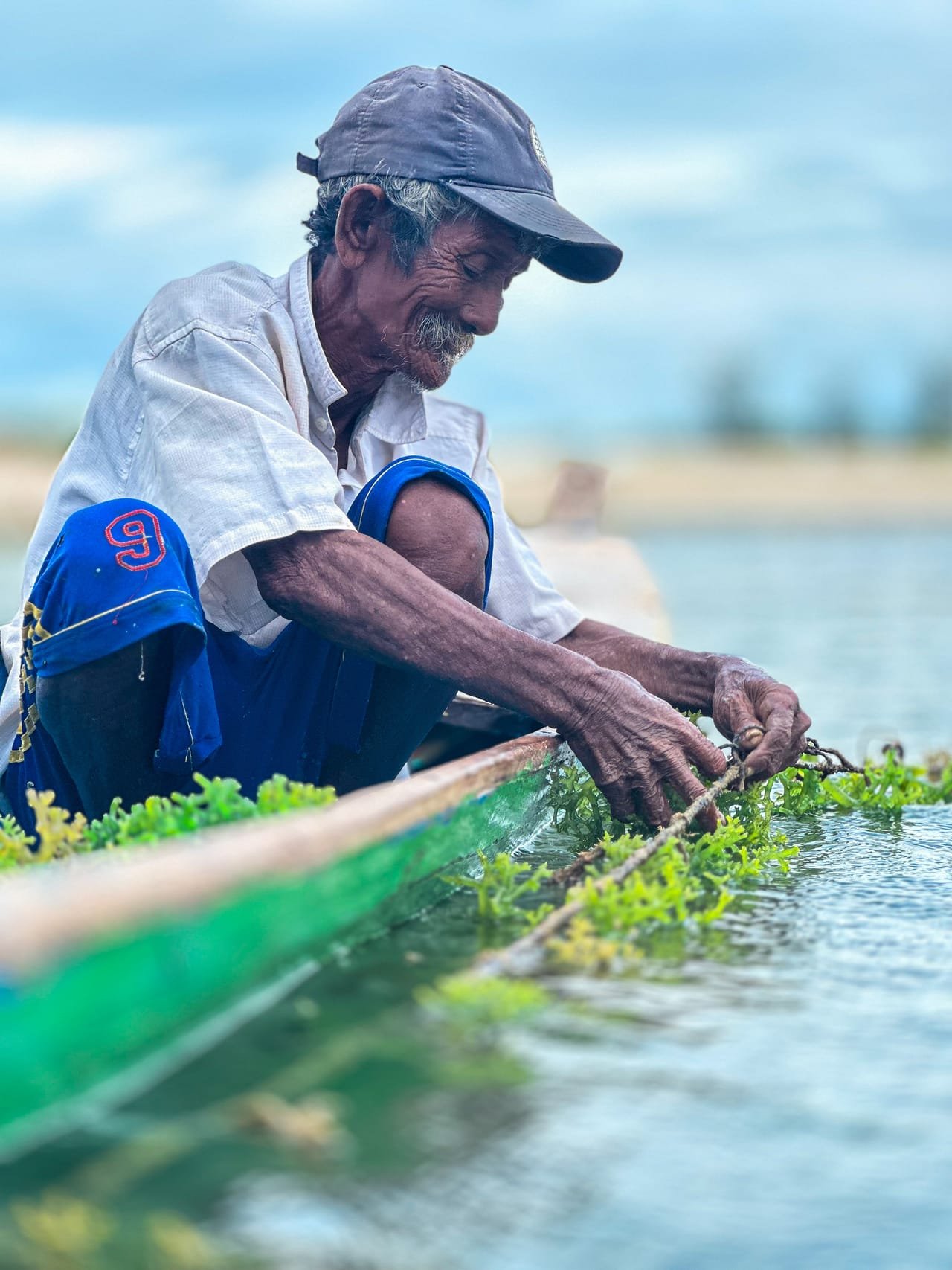
An elderly seaweed farmer tying new growth to lines from his boat
The Farmers

Year-Round Income

For most coastal communities in NTT, seaweed farming is the first real alternative to wild-caught fishing. Lines and rope replace nets and spears. Income comes in every six weeks or so instead of depending on what's left in the reef.

The work is steady and predictable. Households know what's coming in, and when. That's a bigger change than it sounds.

Women's Work

Earning, Many for the First Time

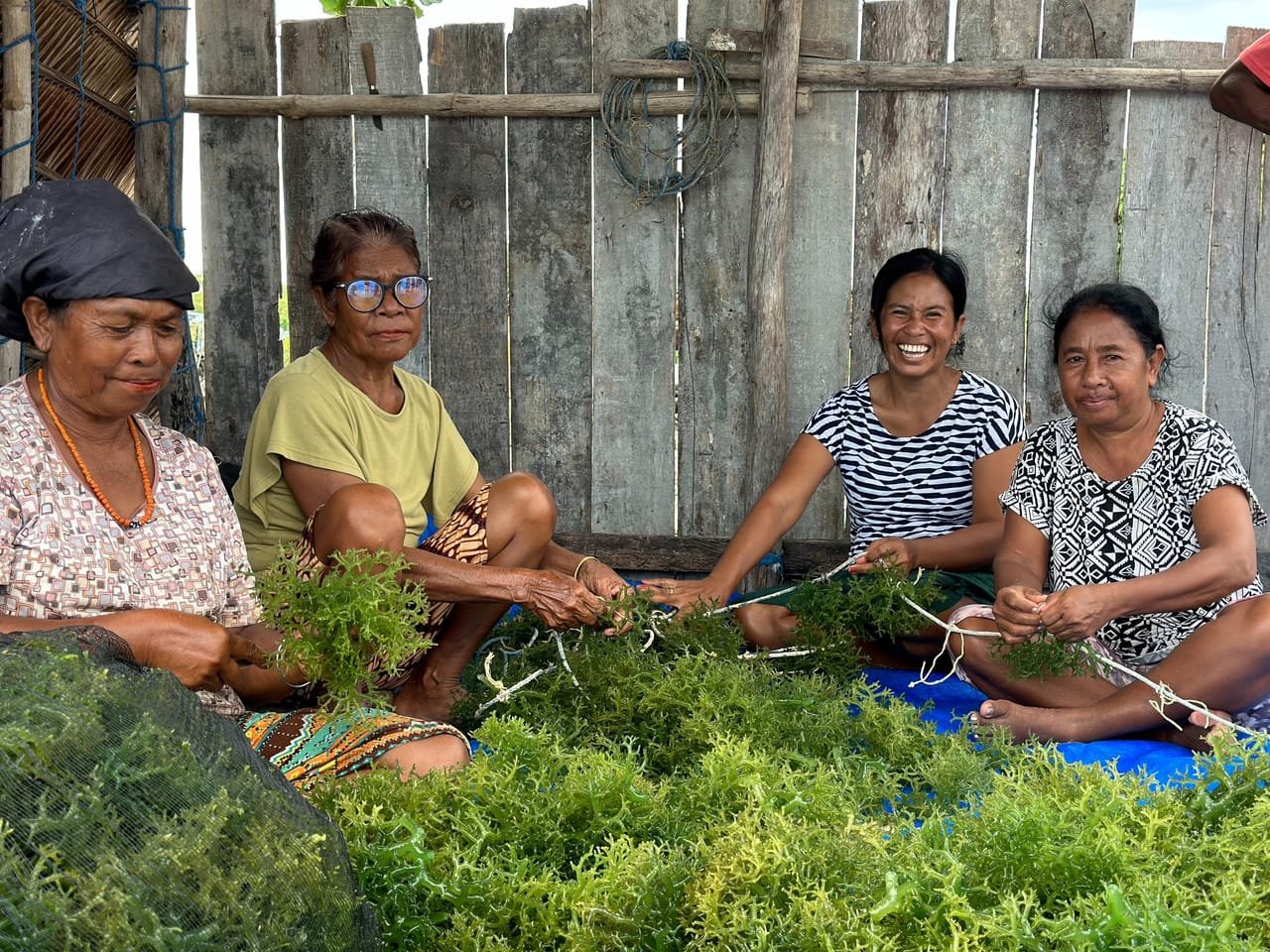
A large share of the seaweed workforce is women — many earning their own income for the first time. The lines are tended close to home, which fits around childcare and household work in a way that fishing never did.

Money moves differently when women earn it. Kids stay in school longer, savings start to build, and more household decisions get shared. It isn't dramatic — just steady.

Women working the seaweed lines
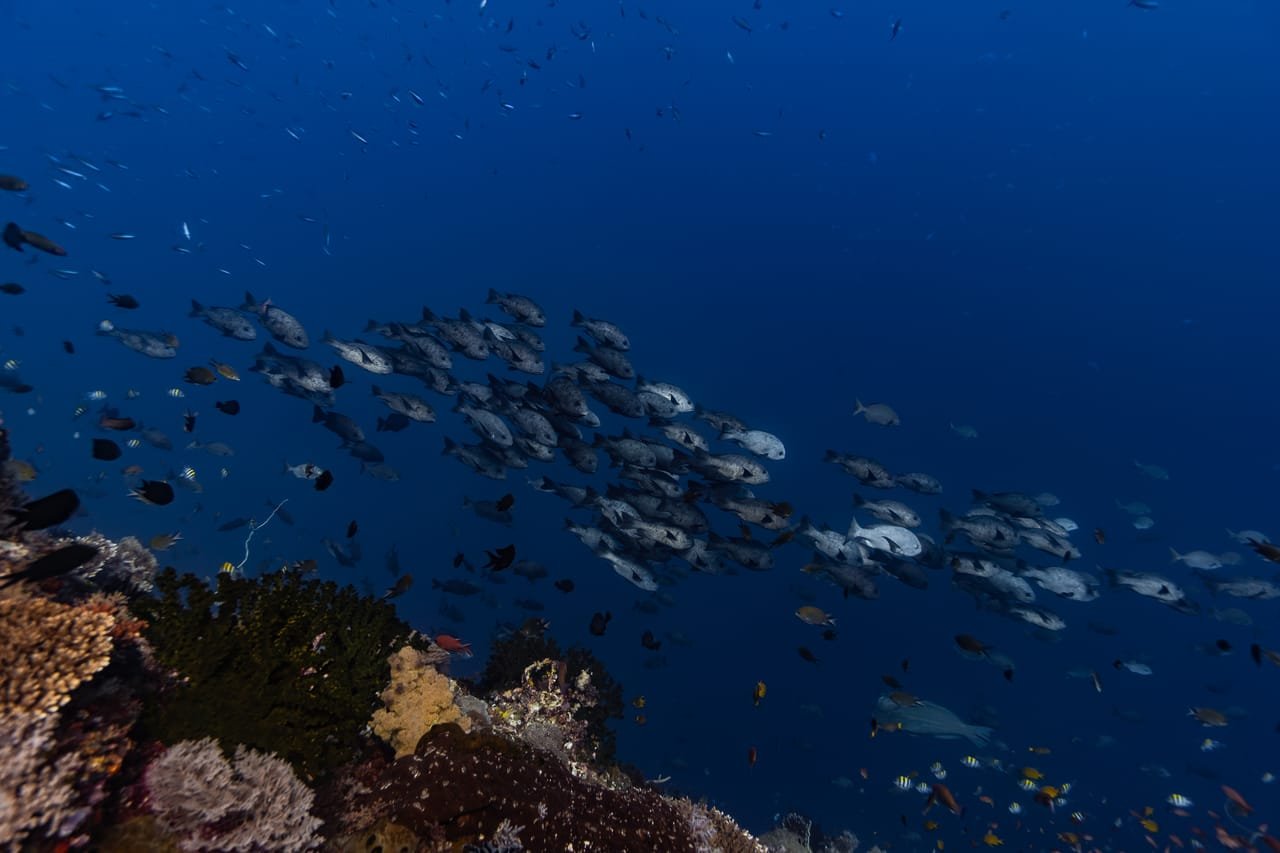
A school of midnight snapper cruising above a healthy reef in the Pantar Strait
The Marine Impact

Less Pressure, More Fish

Every kilogram of seaweed sold is a kilogram of fish nobody had to take from the reef. Across 5,000 farmers, that adds up to a quiet but persistent reduction in wild-catch pressure on the same waters you'll be diving in.

The seaweed lines also act as small habitats themselves — they shelter juvenile fish, slow water flow, and host snails, crabs, and the occasional cuttlefish hunt. The lines aren't dead infrastructure; they're part of the reef now.

Why Seaweed

A Crop That Helps the Ocean

No Fresh Water

Grows in the sea, on rope. Doesn't compete with farmland or irrigation.

Fast Growing

Harvested roughly every six weeks. Year-round, no seasonal gap.

Ocean-Positive

Sequesters carbon and uses no fertilisers or pesticides. Improves local water clarity.

What it becomes. Most of the harvest is processed into carrageenan, a gelling agent used in ice cream, jelly, plant-based milks, toothpaste, cosmetics, and biodegradable packaging. Other streams produce animal feed, plant biostimulants for agriculture, and immunostimulants for shrimp farms. Global demand has been ahead of supply for years, and NTT is one of the largest seaweed-producing regions in the world.

Closer to home — Alor
Ikat

The Women Weaving by the Sea

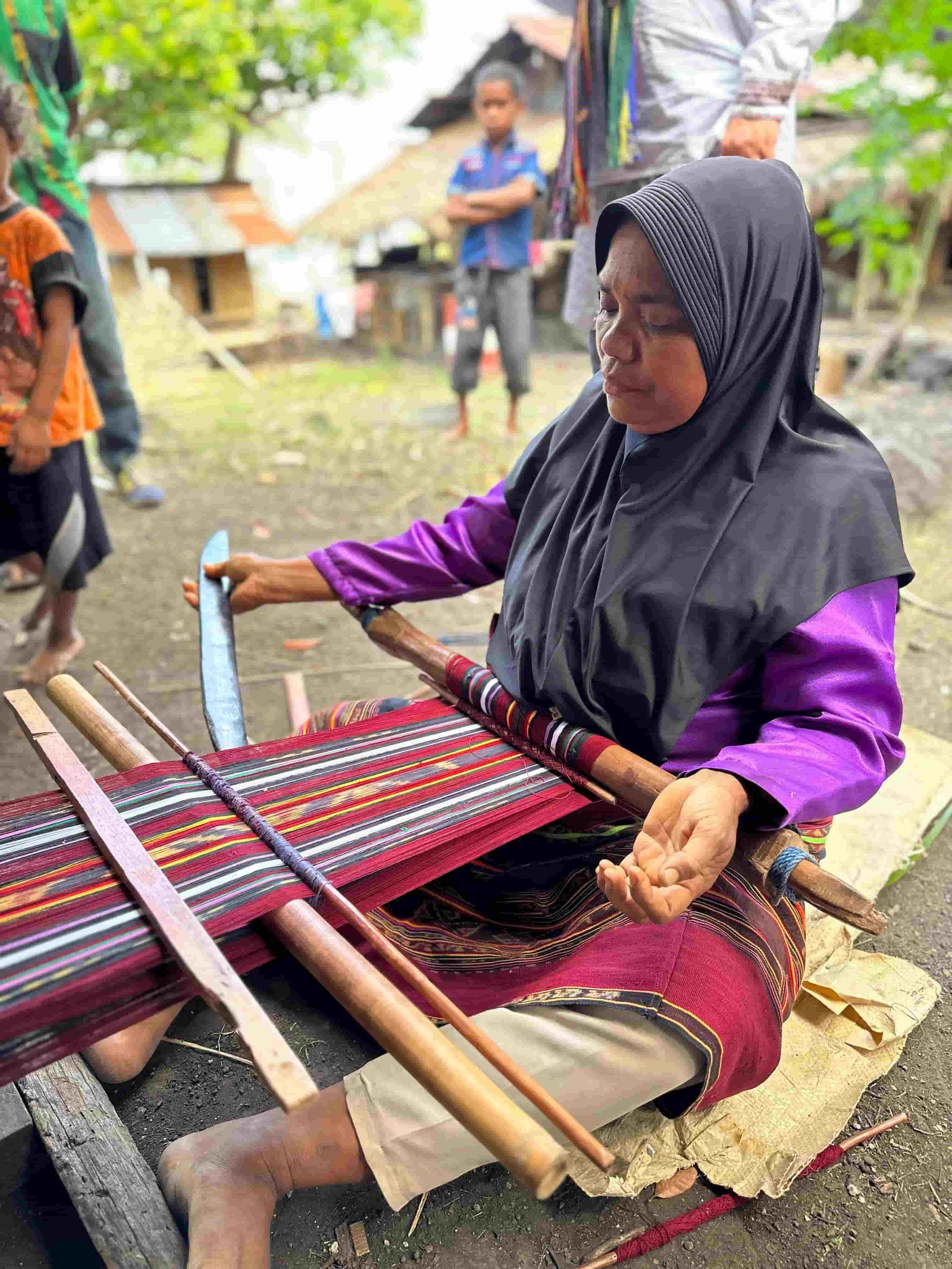
The ikat weavers are mostly along the coast near the resort and on the small islands of Ternate and Pura, just offshore. Umapura, a village on Ternate, produces most of the cloths — and most of those carry ocean motifs: fish, boats, waves, reef patterns. The work happens on backstrap looms, the way it's always been done.

We sell the cloths at the resort and promote the weavers and their work directly. A real market beyond the village for a craft that takes weeks to make — that's the aim.

A woman in a purple shirt and hijab weaving an ikat cloth on a backstrap loom
How an Ikat is Made

Five Steps, Weeks Apart

  1. 01
    Spin
    Cotton is hand-spun into thread on a small wooden wheel.
    1–2 days
  2. 02
    Tie
    Threads are bundled and tied tightly with palm-leaf strips. The tied sections resist the dye later.
    1–2 weeks
  3. 03
    Dye
    Dipped in natural dyes — indigo for blue, morinda root for red, mango bark and tunjung as a mordant. Multiple cycles for deeper tones.
    Each cycle, 1–3 days
  4. 04
    Weave
    Strung on a backstrap loom and woven by hand, foot, and tension. The pattern reveals itself as the cloth grows.
    2–4 weeks
  5. 05
    Finish
    Trimmed, washed, pressed. Ready for ceremony, sale, or the wall.
    A day or two
Total per cloth 6–10 weeks

A stay here funds all three: the diving you came for, the cooperative quietly running in the background, and the weavers in the hills above the resort.

Plan Your Trip

Start Your Alor Adventure

Tell us about your trip. We'll get back to you within 24 hours with a personalised itinerary.

Chat with us